Sleep Apnea Surgery & Treatment in Washington, DC
Table of Contents
- Real Stories: Sleep Apnea Surgery Reviews
- Why Choose Capital Center® for Your Sleep Apnea Surgery?
- What Is Sleep Apnea?
- Treatment Options for Sleep Apnea
- Benefits of Sleep Apnea Surgery
- Who Is an Ideal Candidate for Sleep Apnea Surgery?
- What Is Sleep Apnea Surgery Like?
- Sleep Apnea Surgery Recovery
- Sleep Apnea Treatment & Surgery FAQs
Real Stories: Sleep Apnea Surgery Reviews
Spent the last two years as a patient of Dr. Emery, it’s been a great two years. Having gone through several different surgeries prior to meeting Dr. Emery, one of which went very bad, it was a great experience to work with him. He is patient and understanding and alleviated many of my concerns, reassuring me he could restore and return my jaw and teeth to a healthy condition. He did just that, I am glad to have such a highly skilled competent individual to have helped me through the last two years!
—C.P., Google Review
I had surgery done by Dr. Retana. The experience I had was exceptional! Greater than I even expected. Each and every one of his staff members were always in a great mood, prompt and helpful. This was such a relief for me as I came from out of town. Even after surgery everyone was such a pleasure to work with. Even down to the anesthesiologist. She contacted me the day after my surgery to check on me and to see if I needed anything (never would’ve expected that). My results? AMAZING!!! I mean absolutely amazing!! The information given to me for pre and post op was very thorough. Bedside manor? 10/10!! I’d choose Dr. Retana and his staff over and over if I needed to. I want to say thank you Dr. Retana to you and your entire staff. Thank you for everything! I’ll never not brag about you, your work and your entire office. 🙂
—R.C., Google Review
Why Choose Capital Center® for Your Sleep Apnea Surgery?
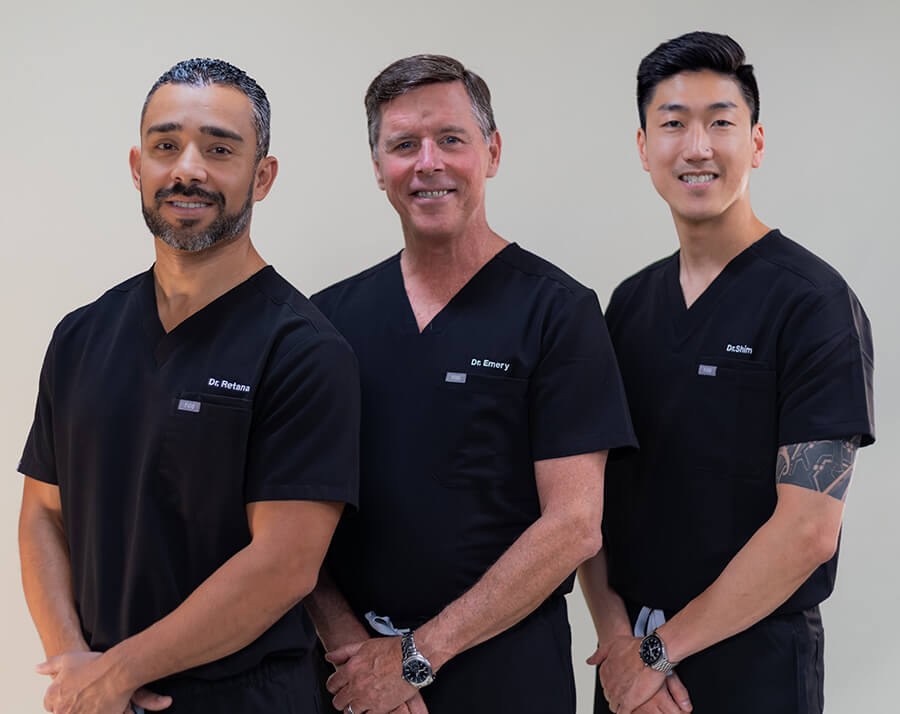
Capital Center® for Surgery in Washington, D.C., is the premier oral and maxillofacial and cosmetic surgery practice, offering excellent oral care for each patient. Our team of highly skilled and experienced oral surgeons are some of the most trusted names in the field, providing unparalleled care paired with surgical precision and expert guidance. Additionally, we prioritize patient comfort and safety by integrating cutting-edge technology like the X-Guide® system, an advanced 3D imaging software that reduces human error and surgical risk. Technology like this system is at the forefront of our practice philosophy—not because it’s easier, but because it improves the experience of our patients and the quality of our care.
Sleep apnea doesn’t have to rule your sleeping and waking life. Our team understands how important this procedure is for your well-being and quality of life—entrust the experts and see what a difference deep sleep can make.
Book Your Sleep Apnea Consultation
Drs. Emery, Retana, and Shim are experienced oral and maxillofacial surgeons who prioritize patient safety and satisfaction above all else. Discover what advanced sleep apnea surgery techniques can do for your rest and well-being: call Capital Center® today at (202) 386-7100 or complete the contact form to request a consultation and learn your options.
What Is Sleep Apnea?
Sleep apnea is a condition in which your breathing stops and starts again as you sleep. This can prevent you from getting proper rest, cause you to fall asleep at unexpected times during the day, and lead to accidents and injuries while you are awake. Just as seriously, sleep apnea can put you at risk for health issues such as pulmonary hypertension, heart disease, and stroke.
The specialists at Capital Center® for Surgery offer effective sleep apnea treatment. Patients often come to us after trying non-surgical options without success. The procedures that our doctors perform provide permanent improvement and predictable outcomes. As a result, patients can breathe comfortably, sleep soundly, enjoy a better quality of life, and reduce health-related risks.
Treatment Options for Sleep Apnea
Doctors sometimes prescribe CPAP (continuous positive airway pressure) therapy as a non-surgical treatment for sleep apnea. A CPAP machine helps keep the airway open to normalize breathing while you sleep. Some patients find the therapy effective, but others cannot tolerate wearing a CPAP mask to sleep every night.
An alternative non-surgical approach to sleep apnea is a wearable appliance. These devices include mouth guards that ease the lower jaw forward and splints that hold the tongue in place. Although effective for mild to moderate cases of sleep apnea, 75 percent of patients choose to stop using these appliances after a while and continue experiencing symptoms as a result.
Maxillomandibular Advancement (MMA)
Maxillomandibular advancement repositions the upper and lower jaws and moves the chin outward, which pulls the entire skeletal structure forward. This shift opens the airway, significantly improving or completely resolving sleep apnea.
In most cases, our specialists perform MMA using general anesthesia in a hospital setting. We combine state-of-the-art 3D diagnostics and CAD/CAM manufacturing to make custom splints, guides, and plates before surgery. During the procedure, the doctor frees the upper and lower jaw from the skull, advances both together, and then secures them in place.
Many of our patients who have MMA surgery also have cosmetic problems related to jaw and skeletal abnormalities. After the procedure, typical sleep apnea patients often have more aesthetically pleasing features because the skeleton is in an ideal position. Moving the jaws also tightens facial skin, diminishing lines and wrinkles. While cosmetics are not the focus of treatment, an improved appearance is a wonderful benefit of the surgery.
Laser-Assisted Palatoplasty
Beyond MMA, our doctors can also treat mild snoring with laser-assisted palatoplasty. This treatment is a serial process: the doctor makes small incisions in the soft palate, and after they heal, patients evaluate whether their snoring has improved or if they need a follow-up procedure. Recovery from palatoplasty can be painful in the seven-to-ten days that follow, and so we spend a lot of time in consultation advising patients about the process.
Benefits of Sleep Apnea Surgery
Sleep apnea surgery offers permanent relief from a condition that is not just uncomfortable, but incongruent with good health. Sleep apnea can affect your cardiovascular health, blood pressure, and daytime functionality—surgery is the most effective way to prevent long-term health issues. Other benefits of sleep apnea surgery include:
- Restored daytime energy and functionality
- Eliminated CPAP or mask therapy dependence
- More comfortable, effective sleep for yourself and your partner
- Improved jaw appearance and function

Who Is an Ideal Candidate for Sleep Apnea Surgery?
Patients who can benefit from sleep apnea surgery are those who have been diagnosed with sleep apnea and for whom non-surgical solutions like CPAP machines or mouthguards are ineffective. Some may also have jaw or skeletal abnormalities that can improve with jaw repositioning through MMA surgery.
Candidates for sleep apnea surgery:
- Are in good health
- Suffer from obstructive sleep apnea
- Have been diagnosed with the condition and have received necessary treatment from other practitioners such as orthodontists or sleep specialists
- Are nonsmokers or are willing to quit
The best way to determine if you are a candidate for sleep apnea surgery is to call Capital Center® for Surgery at (202) 386-7100 or complete the contact form to schedule a consultation.
What Is Sleep Apnea Surgery Like?
Sleep Apnea Surgery Consultation
Other doctors often refer patients to our practice for advanced treatment, typically after completing a polysomnography, or sleep study. If you have not yet had a polysomnography, our practice will work with you and your medical provider to complete the study. If you have already had a sleep study, your doctor will review the results to prepare a treatment plan.
During your initial visit, one of our specialists will examine you and review records from your other medical providers to determine the best course of action.
If you are a good candidate for sleep apnea surgery, your doctor will discuss the procedure in detail and answer any questions you may have. Most patients also see an orthodontist, so we generally time MMA surgery to align with their teeth alignment.
Sleep Apnea Surgery
Each procedure is customized to the patient’s needs and unique anatomy. MMA surgery is performed under general anesthesia in a hospital setting. Before your surgery, your oral surgeon will take images of your jaw and skull and create custom plates and materials to place during the procedure.
Once you are asleep under anesthesia, your jaw will be aligned and secured in place with braces or bars. Next, your surgeon will make tiny incisions within the mouth to avoid visible scars. Through these incisions, they will detach your upper and lower jaw. Both jaws are then advanced by several millimeters to pull the tongue and throat muscles forward. Finally, your custom titanium plates will lock the jaws in their new, projected position.
Sleep Apnea Surgery Recovery
After surgery, rubber bands will hold your jaw in place and limit movement as you heal. You will be given specific instructions for recovery, which may include the following:
- Follow all dietary restrictions
- Care for all incisions, wires, or post-surgical devices as directed
- Attend all check-up appointments
- Follow all post-operative instructions as best to your ability
For four to six weeks after your procedure, you will need to follow a liquid diet. Our staff will provide you with detailed instructions on what you should and should not eat and help make this stage of healing as easy as possible. At six weeks, you can begin eating soft foods, and you can return to a regular diet around eight weeks.
Orthodontic patients usually see their orthodontist at this point to wrap up their final treatment. You might also repeat a polysomnography to document improvement in your sleep apnea. If the surgery is successful, you should no longer need to use a CPAP or other devices.
Sleep Apnea Treatment & Surgery FAQs
Is sleep apnea surgery painful?
No, the procedure is performed under general anesthesia, so you won’t feel any pain during surgery. However, the initial recovery period can bring some discomfort, namely a sore throat from manipulation of the throat and soft palate. Your doctor can prescribe you pain medication to help ease any discomfort during this time.
When can I return to work after MMA surgery?
It depends on the nature of your job, but most patients can return to normal activities within a week or so. However, you will need to maintain a liquid diet for about four to six weeks, after which you can slowly transition your diet to soft foods.
Does insurance cover sleep apnea surgery?
In many cases, yes, insurance will cover the cost of sleep apnea surgery, as long as you have a confirmed medical diagnosis of sleep apnea from a sleep study and proof of failed CPAP therapy.