
Facial Trauma Treatment in Washington, D.C.
Table of Contents
- See the Difference: Facial Trauma Treatment Before & After Photos
- Real Stories: Facial Trauma Treatment Reviews
- Why Choose Capital Center® for Your Facial Trauma Treatment?
- Book Your Facial Trauma Treatment Consultation
- What Is Facial Trauma Treatment?
- Benefits of Facial Trauma Treatment at Capital Center® for Surgery
- Who Is an Ideal Candidate for Facial Trauma Treatment?
- What Is Facial Trauma Treatment Like?
- Facial Trauma Surgery Recovery
- Facial Trauma Treatment FAQs
Oral and maxillofacial surgeons are trained, skilled, and uniquely qualified to manage and treat facial trauma. Injuries to the face, by their very nature, impart a high degree of emotional, as well as physical, trauma to patients. The science and art of treating these injuries requires special training involving a “hands-on” experience and an understanding of how the treatment provided will influence the patient’s long-term function and appearance.
Our doctors meet and exceed these modern standards. They are trained, skilled, and uniquely qualified to manage and treat facial trauma. They are on staff at the MedStar Washington Hospital Center, George Washington Hospital, and Children’s National Hospital. Our experienced providers deliver emergency room coverage for the following conditions:
- Facial lacerations
- Intraoral lacerations
- Avulsed (knocked out) teeth
- Fractured facial bones (cheek, nose, or eye socket)
- Fractured jaws (upper and lower jaw)
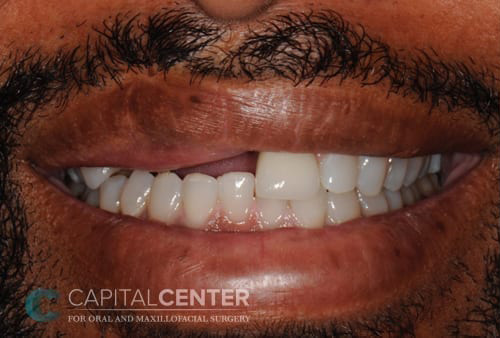
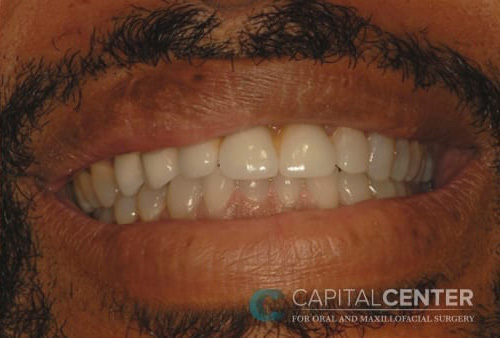
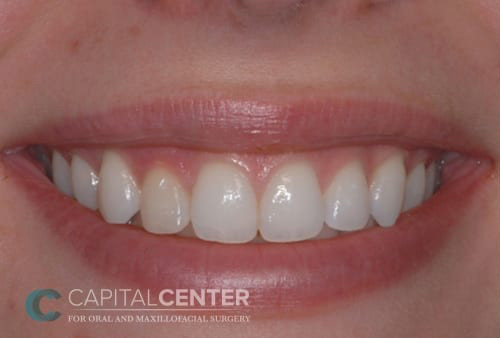
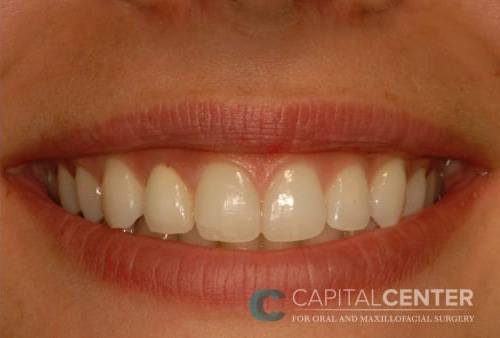
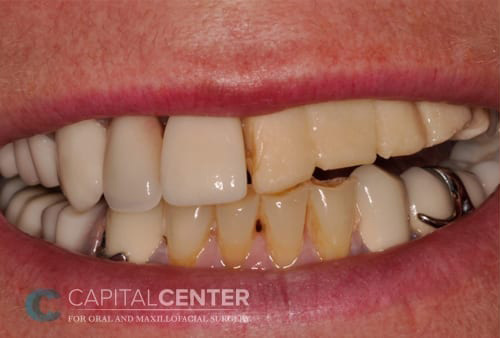
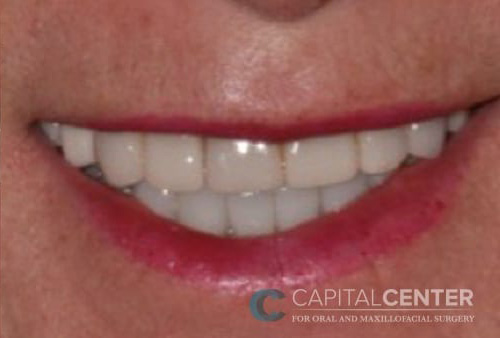
Real Stories: Facial Trauma Treatment Reviews
P.C., Google Review
“Dr. Emery and his team implanted 4 teeth in my upper jaw. Judging by the results, it is clear that Dr. Emery is a very gifted surgeon—and the whole process was amazingly painless. In addition, Dr. Emery proved to be a clear and thorough communicator, taking the time to explain the why and how of each phase of the treatment, and sharing his enthusiasm for the state-of-the-art tools being developed. The administrative part of the process (including providing documentation for insurance purposes) was handled efficiently by the staff. I am most happy with the entire experience, and do not hesitate to recommend Dr. Emery and the Capital Center®. Thank you!”
W.T., Google Review
“Dr. Emery is a top notch oral surgeon with an extraordinary staff. I came to Dr. Emery two years ago seeking dental implants in my upper jaw. I accepted his proposed treatment plan of nine implants and two bone grafts. It was an amazing experience accompanied by little or no pain. I returned on August 13 for a check up and as I expected all is well.
I cannot thank Dr. Emery enough for his expertise and his staff for their professionalism and kindness.”
Why Choose Capital Center® for Your Facial Trauma Treatment?
Capital Center® for Surgery is the premier oral and maxillofacial and cosmetic surgery practice in Washington, D.C., where our experienced surgeons utilize the most advanced techniques and technologies to provide unparalleled patient care. Technology such as precision imaging software and the X-Guide® system is at the forefront of our practice philosophy because it improves the patient experience, reduces pain, and enhances safety and accuracy.
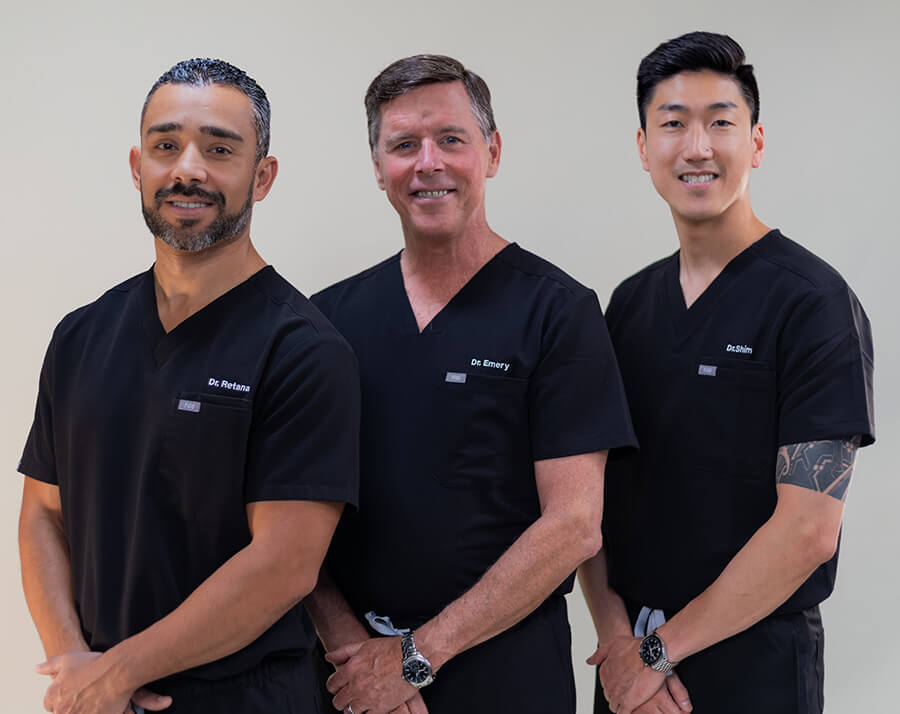
Our surgeons, Dr. Emery, Dr. Retana, and Dr. Shim, are experienced oral and maxillofacial surgeons who understand the nuanced objectives of facial trauma treatment and are committed to providing expedient, precise, and compassionate care.
Book Your Facial Trauma Treatment Consultation
Drs. Emery, Retana, and Shim are here to help restore optimum function, aesthetics, and your confidence with non-emergency facial trauma treatments. Call Capital Center® today at (202) 386-7100 or complete the contact form to request a consultation and learn your options.
What Is Facial Trauma Treatment?
There are a number of possible causes of facial trauma, such as motor vehicle accidents, accidental falls, sports injuries, interpersonal violence, and work-related injuries. Types of facial injuries can range from injuries to teeth to extremely severe injuries of the skin and bones of the face.
Typically, facial injuries are classified as soft-tissue injuries (skin and gums), bone injuries (fractures), or injuries to special regions (such as the eyes, facial nerves, or the salivary glands).
Soft Tissue Injuries of the Maxillofacial Region
When soft-tissue injuries, such as lacerations, occur on the face, they are repaired with sutures. In addition to the obvious concern of providing a repair that yields the best possible cosmetic result, care is taken to inspect for and treat injuries to structures such as facial nerves, salivary glands, and salivary ducts (or outflow channels).
Our doctors are well-trained oral and maxillofacial surgeons proficient at diagnosing and treating all types of facial lacerations.
Bone Injuries of the Maxillofacial Region
Fractures of the facial bones are treated similarly to fractures in other parts of the body. The specific form of treatment is determined by various factors, including the location and severity of the fracture, the patient’s age, and general health. When an arm or leg is fractured, a cast is often applied to stabilize the bone and allow proper healing. Since a cast cannot be placed on the face, other means have been developed to stabilize facial fractures.
One of these options involves wiring the jaws together for certain fractures of the upper and/or lower jaw. Certain other types of jaw fractures are best treated and stabilized with the surgical placement of small plates and screws at the site of involvement. This technique or treatment often allows healing and obviates the need to wire the jaws together. This technique is called “rigid fixation” of a fracture.
The relatively recent development and use of rigid fixation has profoundly improved the recovery period for many patients, allowing them to return to normal function more quickly.
Injuries to the Teeth & Surrounding Dental Structures
Oral and maxillofacial surgeons are usually involved in treating fractures of the supporting bone or replanting teeth that have been displaced or knocked out. These types of injuries are treated with one of several forms of splinting (stabilizing the teeth by wiring or bonding them together).
Other dental specialists may be called upon, such as endodontists, who may be asked to perform root canal therapy, and/or restorative dentists who may need to repair or rebuild fractured teeth. If injured teeth cannot be saved or repaired, dental implants are often used to replace missing teeth.


Benefits of Facial Trauma Treatment at Capital Center® for Surgery
Whether you are seeking facial trauma treatment in an emergency capacity or not, restoring your facial aesthetics, function, and comfort are of high priority. As each patient is different and will have different needs based on their specific trauma or injury, the benefits of facial trauma treatment vary.
Some potential benefits include:
- Restored function of biting, chewing, and speech
- Resolved issues of pain, infection, or discomfort
- Repaired smile
- Realignment of jaw and facial bones
And because our team utilizes the technological benefits of the X-Guide® navigation system to visualize the interior of the jaw, patients can experience the following additional benefits:
- Less invasive techniques
- More precise placement of implants
- Reduced risk of surgical mistakes and subsequent procedures
- Faster surgical time
- Reduced post-operative pain
Who Is an Ideal Candidate for Facial Trauma Treatment?
If you have damaged or missing teeth, broken or fractured facial bones, or other facial injuries, you might be a candidate for facial trauma treatment. Our practice offers treatment for non-emergency facial trauma, so many patients may require immediate care from an emergency facility first, then further care once initial care has been established.
Candidates for facial trauma treatment:
- Are in good health
- Need functional and/or aesthetic care for facial trauma or injury
- Have received necessary pre-treatment work such as root canals
- Are nonsmokers
The best way to determine if you are a candidate for facial trauma treatment is to call Capital Center® for Surgery at (202) 386-7100 or complete the contact form to schedule a consultation.
What Is Facial Trauma Treatment Like?
Facial Trauma Treatment Consultation
Your consultation is an important part of the facial trauma treatment process. You may have seen another dentist first, or perhaps you have not. In any case, your surgeon will need to examine your mouth or jaw and obtain imaging with a 3D cone-beam scan. This gives our team much better visibility and provides your surgeon with access to view the treatment area during surgery using the X-Guide® system.
Your surgeon may discuss any prior treatment, your medical history, and your goals for the procedure. They will then create a treatment plan that details next steps as it pertains to your unique case.
Facial Trauma Treatment
The details of your trauma treatment will vary depending on your needs; no two patients are the same. When indicated, our surgeons use the X-Guide® system to accurately visualize and place dental implants or perform other procedures, reducing surgical risks, shortening surgery time, and maintaining a minimally invasive approach.
Certain procedures will need to be performed in stages, especially if the injury is severe. For example, fractures must be repaired before dental implants can be placed. The specifics of your trauma treatment will be detailed during your consultation and within your surgical plan.
Facial Trauma Surgery Recovery
Post-surgical pain and discomfort are minimized with the X-Guide® system, but you may be prescribed pain medication and/or antibiotics. Be sure to care for your sutures as directed.
You will receive specific recovery instructions that are related to your procedure, which may include the following:
- Avoid crunchy, hard, or chewy foods.
- Some patients may require a liquid diet.
- Follow all recovery instructions.
- Attend your check-up appointments.

Facial Trauma Treatment FAQs
What should I do if my tooth is knocked out?
If a tooth is knocked out, it should be placed in salt water or milk. The sooner the tooth is reinserted into the dental socket, the better its chance of survival. Therefore, the patient should see a dentist or oral surgeon as soon as possible. Never attempt to wipe the tooth off, since remnants of the ligament that hold the tooth in the jaw are attached and are vital to the success of replanting the tooth.
Will I have scars after my facial trauma treatment?
There is a risk of scarring after facial trauma treatment, firstly from the trauma or injury itself, and then potentially from any necessary procedures that involve incisions. However, facial trauma surgery is highly nuanced, so there’s no real way of knowing what your particular treatment will entail. Our surgeons understand how important it is not only to achieve the necessary repair after trauma, but also to be mindful of the aesthetic results.
An attempt is always made to access the facial bones or soft tissues through the fewest necessary incisions. At the same time, the incisions that become necessary are designed to be small and, whenever possible, placed so that the resultant scar is hidden.
Schedule Your Dental Implant Consultation Today
Don’t leave your oral health up to chance—call Capital Center® for Surgery today at (202) 386-7100 or complete the contact form to schedule your personalized dental implant consultation with one of our expert implantologists and get started on a healthy and happy smile.