Corrective Jaw Surgery in Washington, D.C.
Orthognathic surgery, or jaw surgery, is needed when the jaws don’t meet correctly and/or the teeth don’t fit the jaws. While teeth are straightened with orthodontics, corrective jaw surgery repositions a misaligned jaw to improve facial appearance and ensure that teeth meet correctly and function properly.
Our doctors are highly trained and experienced professionals, uniquely qualified to provide advanced care for patients with misaligned jaws, and adept at working closely with other dental professionals, such as orthodontists, to create effective treatment and surgical plans for corrective jaw surgery.
Table of Contents
- See the Difference: Corrective Jaw Surgery Before & After Photos
- Real Stories: Corrective Jaw Surgery Reviews
- Why Choose Capital Center® for Your Corrective Jaw Surgery?
- Book Your Corrective Jaw Surgery Consultation
- What Is Corrective Jaw Surgery?
- Benefits of Corrective Jaw Surgery
- Who Is an Ideal Candidate for Corrective Jaw Surgery?
- What Is Corrective Jaw Surgery Like?
- Corrective Jaw Surgery Recovery
Real Stories: Corrective Jaw Surgery Reviews
C.P., Google Review
Spent the last two years as a patient of Dr. Emery; it’s been a great two years. Having gone through several different surgeries prior to meeting Dr. Emery, one of which went very badly, it was a great experience to work with him. He is patient and understanding, and he alleviated many of my concerns, reassuring me that he could restore my jaw and teeth to a healthy condition. He did just that; I am glad to have such a highly skilled, competent individual to have helped me through the last two years!
R.C., Google Review
I had surgery done by Dr. Retana. The experience I had was exceptional! Greater than I even expected. Each and every one of his staff members was always in a great mood, prompt, and helpful. This was such a relief for me as I came from out of town. Even after surgery, everyone was such a pleasure to work with. Even down to the anesthesiologist. She contacted me the day after my surgery to check on me and to see if I needed anything (never would’ve expected that). My results? AMAZING!!! I mean absolutely amazing!! The information given to me for pre and post op was very thorough. Bedside manner? 10/10!! I’d choose Dr. Retana and his staff over and over if I needed to. I want to say thank you, Dr. Retana, to you and your entire staff. Thank you for everything! I’ll never not brag about you, your work, and your entire office. 🙂
A.P., Google Review
My experience at the Capital Center has been excellent. Dr. Robert Emery is an outstanding surgeon, and he has a very comforting personal approach to caring for his patients. I would recommend him to my friends and colleagues.
Why Choose Capital Center® for Your Corrective Jaw Surgery?
Capital Center® for Surgery in Washington, D.C., is a premier oral and maxillofacial and cosmetic surgery practice, offering superior oral care through exceptional surgeons who use the most advanced techniques and technologies to support patient needs.
Technology like the advanced imaging software, the X-Guide® system, sits at the forefront of our practice philosophy, not because it’s easier, but because it provides greater precision during surgery, increases patient comfort and convenience, and eliminates certain risks and errors.
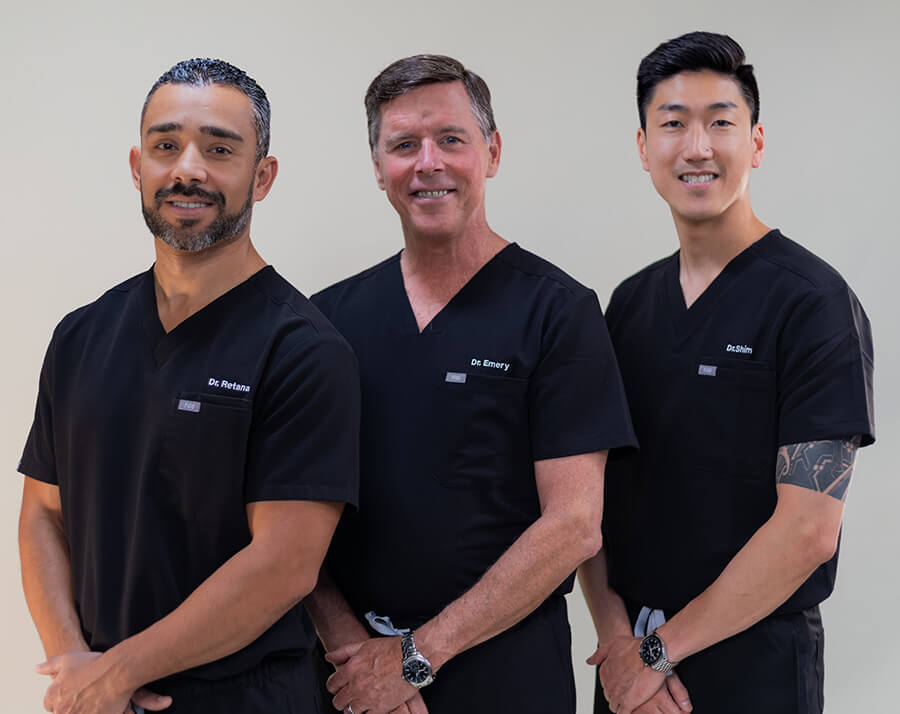
Our surgeons, Dr. Emery, Dr. Shim, and Dr. Retana, are experienced oral and maxillofacial surgeons who prioritize patient comfort, safety, and satisfaction above all else.
Book Your Corrective Jaw Surgery Consultation
Drs. Emery, Retana, and Shim are here to help restore function, enhance aesthetics, and improve your oral health with advanced corrective jaw surgery. Call Capital Center® today at (202) 386-7100 or complete the contact form to request a consultation and learn your options.
What Is Corrective Jaw Surgery?
Corrective jaw surgery, or orthognathic surgery, is a procedure that repositions the upper and lower jaws to correct structural misalignments. Often performed in conjunction with orthodontics, corrective jaw surgery may be indicated for patients with the following concerns:
- Difficulty in chewing, biting, or swallowing
- Speech problems
- Chronic jaw or TMJ pain
- Open bite
- Protruding jaw
- Breathing problems
Corrective jaw surgery can improve issues that have been present at birth (congenital), were caused by growth or environmental factors, or injury. In many cases, corrective jaw surgery can help both functional and aesthetic concerns simultaneously.
Benefits of Corrective Jaw Surgery
Living with a malformed or misaligned jaw can be difficult and uncomfortable, causing issues with your bite, ability to chew, and even speech. It can also cause aesthetic concerns, such as a crooked smile, which can make patients feel self-conscious. Corrective jaw surgery, while different for each patient, aims to remedy these issues to restore full functionality and improve aesthetics. Other potential benefits of corrective jaw surgery include:
- Restored function of bite, chewing, and speech
- Relief from chronic jaw tension, headaches, and TMJ symptoms
- Improved breathing and sleep apnea
- Reduced dental wear and risk of gum disease
- Balanced appearance and aesthetics

Who Is an Ideal Candidate for Corrective Jaw Surgery?
Patients who can benefit from orthognathic surgery include those with an improper bite or misaligned jaws. While orthodontics alone can correct bite problems when only the teeth are involved, orthognathic surgery is required for patients whose issues are related to the structure of the jaw. Candidates may have started the process with their orthodontist and are ready for the next step of corrective jaw surgery.
Candidates for corrective jaw surgery:
- Are in good health
- Require structural alignment of the jaw(s)
- Have received necessary treatment from orthodontists or other dentists
- Are nonsmokers or are willing to quit
The best way to determine if you are a candidate for corrective jaw surgery is to call Capital Center® for Surgery at (202) 386-7100 or complete the contact form to schedule a consultation.
What Is Corrective Jaw Surgery Like?
Corrective Jaw Surgery Consultation
Before any treatment begins, a consultation will be held to conduct a complete examination, including obtaining a 3D cone-beam imaging scan. These images not only provide important visual information about your jawbone structure and alignment needs, but are also used during surgery when the X-Guide® system is used. This ensures the highest levels of accuracy and precision, reduces surgical time, and reduces certain surgical risks.
During the pre-treatment consultation, feel free to ask any questions you have about your treatment. When you are fully informed about the aspects of your care, you and your dental team can decide together whether to proceed with treatment.
Corrective Jaw Surgery
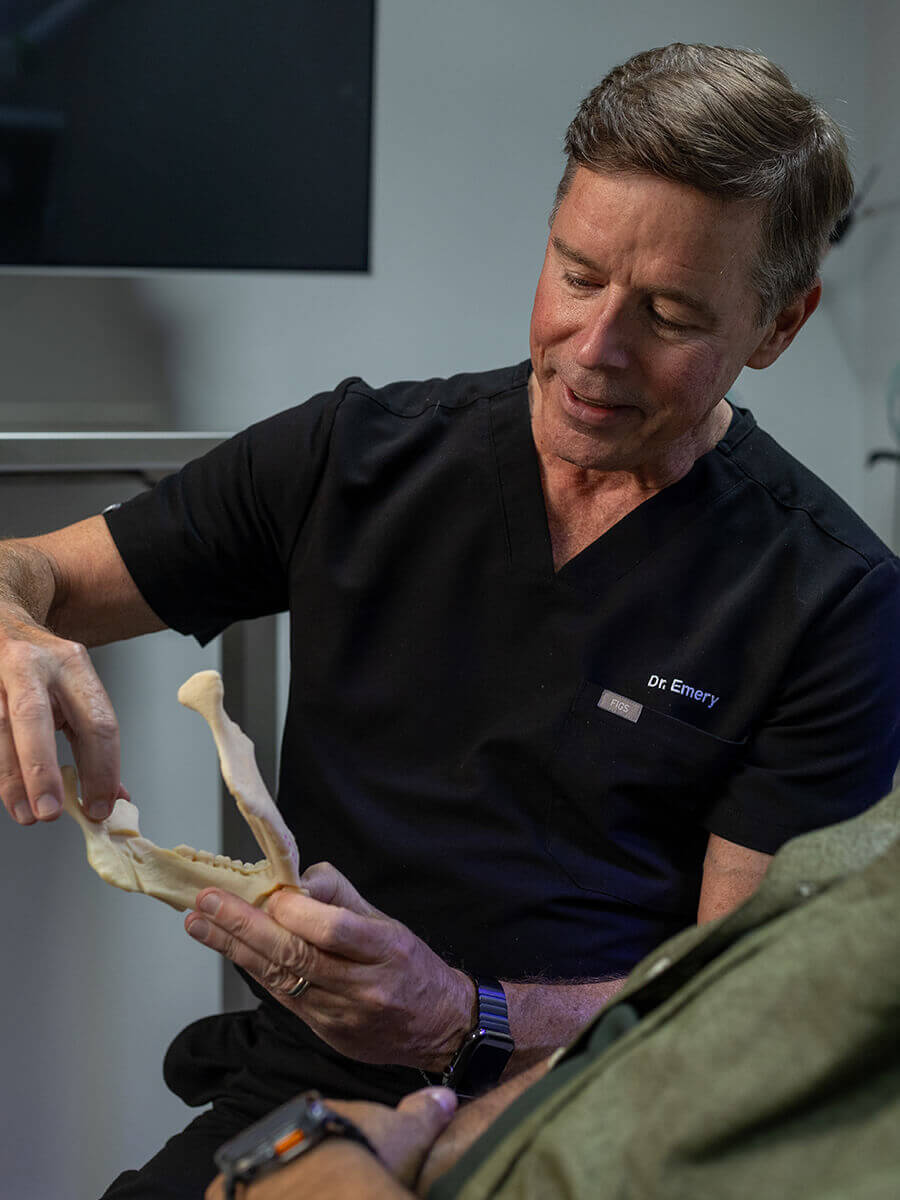
Our doctors use modern computer techniques and three-dimensional models to show you exactly how your surgery will be approached. Using comprehensive facial X-rays and computer imaging, we can show you how your bite will improve and even give you an idea of how you’ll look after surgery. This helps you understand the surgical process and the extent of the treatment prescribed. Our goal is to help you see the benefits of orthognathic surgery.
As each procedure is highly tailored to the patient’s needs and to other processes, such as orthodontics, each surgical plan will be completely unique. Our doctors will work closely with your dentist and orthodontist during your treatment to ensure a smooth, effective process between offices and steps.
The actual surgery involves making small incisions and moving your teeth and jaws into a new position, sometimes using metal pins or plates to keep everything in place, resulting in a more attractive, functional, and healthy dental-facial relationship.
Corrective Jaw Surgery Recovery
Our surgeons always prioritize minimizing pain, discomfort, and swelling whenever possible, whether through the use of the X-Guide® system or other technologies, or through preventive measures such as specific medications that reduce post-operative pain. In any case, you will receive detailed aftercare instructions specific to your procedure, so be sure to follow them to the best of your ability. These instructions may include the following:
- Avoid crunchy, hard, or chewy foods.
- Some patients may need a liquid diet.
- Care for all incisions, wires, or post-surgical devices as directed.
- Attend all check-up appointments.