
TMJ Disorder Treatment & Relief in Washington, D.C.
Advanced Treatments, Profound Relief
If you are experiencing pain, “clicking” sounds, headaches, or trouble chewing, you may have a temporomandibular joint (TMJ) disorder. Also called TMD, this disorder affects the jaw joints and the surrounding muscles, sometimes due to misalignment. For some patients, pain and symptoms are most pronounced when talking or chewing, which can disrupt daily life. Because some TMJ problems can lead to more serious conditions, early detection and treatment matter.
No single treatment can resolve TMJ disorders completely, and treatment takes time to become effective. Our doctors at Capital Center® for Surgery can help you achieve a healthier, more comfortable jaw.
Table of Contents
- Real Stories: TMJ Disorder Treatment Patient Reviews
- Why Choose Capital Center® for Your TMJ Disorder Treatment?
- Book Your TMJ Disorder Treatment Consultation Today
- What Is TMJ Disorder?
- Who Is an Ideal Candidate for TMJ Disorder Treatment?
- What Causes TMJ Disorder?
- What Are the Benefits of TMJ Disorder Treatment?
- What Are My TMJ Disorder Treatment Options?
- What Is the TMJ Disorder Treatment Process Like?
- TMJ Disorder FAQs
Real Stories: TMJ Disorder Treatment Patient Reviews
A.P., Google Review
My experience at the Capital Center has been excellent. Dr. Robert Emery is an outstanding surgeon, and he has a very comforting personal approach to caring for his patients. I would recommend him to my friends and colleagues.
K. W., Google Review
Amazing staff from every part of the process– from the moment you walk through the door to leaving surgery! Everyone is so kind and genuinely happy to see you there. For wisdom teeth removal, they are so caring about your recovery process. 10/10 place!
H.B., Google Review
I had a great experience. I had three extractions and an implant body, and Dr. Emery did an awesome job. He is a great professional and friendly with patients. All staff do their best to make patients feel comfortable and relaxed. I strongly recommend Capital Center and Dr. Emery.
Why Choose Capital Center® for Your TMJ Disorder Treatment?
Capital Center® for Surgery is Washington, D.C.’s premier OMS and cosmetic surgery practice, where patients are treated to elite care from expert surgeons and cutting-edge technology. What sets Capital Center® apart is not just our commitment to excellence and authenticity, but our seamless integration of technology to better serve our patients.
At Capital Center®, technology is a core part of our philosophy, not because it is easier, but because it transforms your experience and helps our team serve you better. From advanced imaging to the X-Guide® navigation system, technology removes guesswork from diagnosis and minimizes human error for a more comfortable, effective experience.
Book Your TMJ Disorder Treatment Consultation Today
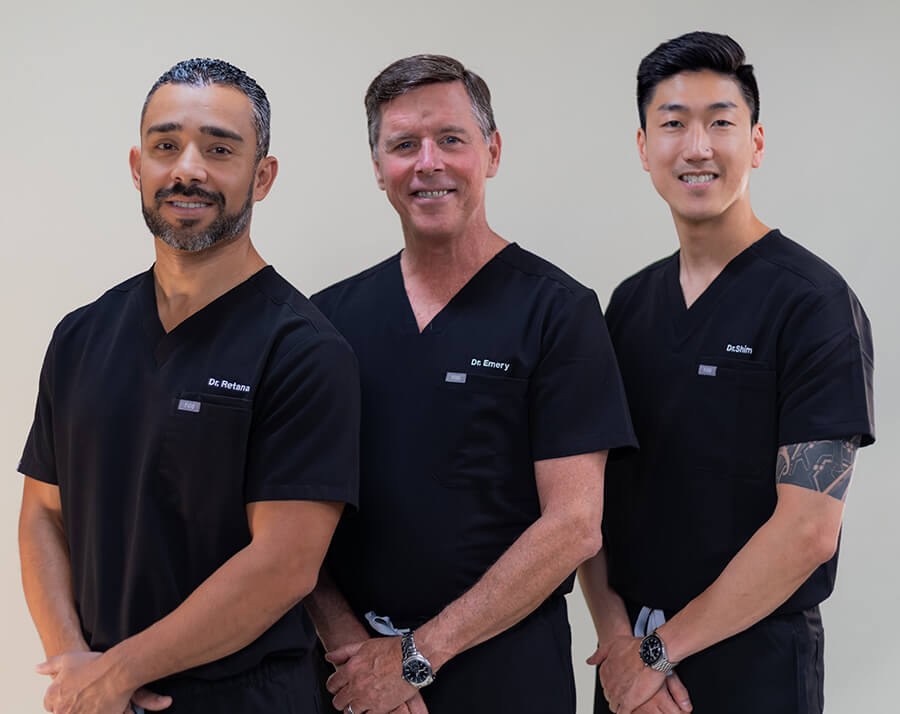
Drs. Emery, Retana, and Shim are here to help you diagnose and treat your TMJ disorder so you can live more comfortably with a beautiful smile. Call Capital Center® today at (202) 386-7100 or complete the contact form to request a consultation and learn more about your TMJ disorder treatment options.
What Is TMJ Disorder?
TMJ (temporomandibular joint) disorders, sometimes called TMD (temporomandibular disorder), are a family of problems related to your complex jaw joint. If you have symptoms like pain or a “clicking” sound, you’ll be glad to know these problems are easier to diagnose and treat than in the past. These symptoms occur when the jaw joint and the chewing muscles (muscles of mastication) don’t work together properly.
Who Is an Ideal Candidate for TMJ Disorder Treatment?
If you think you have a TMJ disorder, consider the following questions:
- Do you grind or clench your teeth?
- Do you wake up with sore, stiff jaw muscles?
- Do you have frequent headaches or neck aches?
- Does the pain get worse when you clench your teeth?
- Does stress increase your clenching and pain?
- Does your jaw pop, click, catch, or lock when you open your mouth?
- Is it difficult or painful to open your mouth, eat, or yawn?
- Have you ever injured your neck, head, or jaw?
- Have you had arthritis or other problems in other joints?
- Do your teeth no longer touch when you bite?
- Do your teeth meet differently sometimes?
- Is it hard to bite or tear food with your front teeth?
- Are your teeth loose, broken, worn, or overly sensitive?
If you answered “yes” to a majority of these questions, you may have a TMJ disorder. Understanding TMD symptoms is the first step toward relief. If you think you have a TMJ disorder, you may be a candidate for treatment.
The best way to determine if you are a candidate for TMD treatment and to discover if you have a TMJ disorder is to schedule a consultation with one of our expert oral surgeons. Call Capital Center® for Surgery at (202) 386-7100 or complete the contact form to schedule a consultation.

What Causes TMJ Disorder?
TMJ disorders develop for many reasons. You might clench or grind your teeth, which tightens your jaw muscles and stresses your joints. You may have a damaged jaw joint due to injury or disease. Injuries and arthritis can damage the joint directly or stretch or tear the muscles and ligaments. As a result, the disk, which is made of cartilage and functions as the “cushion” of the jaw joint, can slip out of position. Whatever the cause, symptoms may include a misaligned bite, pain, clicking, or grating noise when you open your mouth, or trouble opening your mouth all the way.
TMJ disorders can cause long-term pain, chewing problems, or damage to the teeth from prolonged grinding or clenching. In many cases, these problems overlap, worsening the effects.
What Are the Benefits of TMJ Disorder Treatment?
The benefits of seeking treatment for your TMD include:
- Improved physical comfort
- Pain relief
- Improved bite and chewing function
- Reduced risk of long-term issues and damage to the teeth

What Are My TMJ Disorder Treatment Options?
TMD affects everyone differently, and there is no single one-size-fits-all treatment—in many cases, medication and conservative therapies are used in combination for ideal results. Our doctors can use various treatment options to improve your jaw’s harmony and function. Once a consultation confirms a diagnosis of TMJ disorder, our doctors will create an individualized course of treatment. Treatment works best with a team approach that combines self-care with professional care.
Medications for TMJ Disorder
Initial treatment goals are to relieve the muscle spasm and joint pain. This is usually accomplished with pain relievers, anti-inflammatories, or muscle relaxants. Steroids can be injected directly into the joints to reduce pain and inflammation. For patients with severe muscle spasms, BOTOX® is a useful adjunct that can provide quick, dramatic symptom improvement.
Self-Care Treatments for TMJ Disorder
Self-care treatments can often be effective as well and include:
- Intentionally resting your jaw
- Keeping your teeth apart when you are not swallowing or eating
- Eating soft foods
- Applying ice and heat
- Performing jaw exercises
- Practicing good posture
Stress management techniques such as physical therapy may also be recommended.
TMJ Disorder Mouthguards and Appliances
A temporary, clear plastic appliance called a splint (or nightguard) is often recommended for TMJ disorders.
A splint fits over your top or bottom teeth, keeps them apart, relaxes the muscles, and reduces pain. Different types of appliances serve different purposes.
- A nightguard helps you stop clenching or grinding your teeth, reduces muscle tension at night, and helps to protect the cartilage and joint surfaces.
- An anterior positioning appliance moves your jaw forward, relieves pressure on parts of your jaw, and helps reposition the disc. It may be worn 24 hours a day to help your jaw heal.
- An orthotic stabilization appliance is worn 24 hours a day or just at night to move your jaw into proper position. These appliances also help to protect from tooth wear.
Bite Correction or Surgery for TMJ Disorder
If your TMJ disorder has caused alignment problems with teeth and jaw, you may need treatment such as bite adjustment (equilibration), orthodontics with or without jaw reconstruction, or restorative dental work. Surgical options such as arthroscopy and open joint repair restructuring are reserved only for severe cases. Our doctors do not consider TMJ surgery unless the jaw can’t open, is dislocated, has severe degeneration, or the patient has unsuccessfully undergone appliance treatment.
What Is the TMJ Disorder Treatment Process Like?
TMJ Disorder Consultation
The first step to getting you a TMD treatment plan is an initial consultation with one of our physicians. They will discuss your current symptoms, any previous TMD treatments or medications you’ve taken, and your medical history. Next, they will take images of your jaw and teeth using a 3D cone beam imaging scan. This provides an accurate map of your jaw and helps visualize where any misalignment occurs. Lastly, they will create a treatment plan and schedule the next steps.
TMJ Disorder Treatment
Each patient is different, and your TMJ disorder treatment will be unique to your needs. In many cases, a combination of mild medication and self-care therapies is very beneficial, but it’s best complemented with a custom mouth guard to help realign your jaw. Your surgeon will design the ideal treatment plan for your needs and the severity of your condition.
TMJ Disorder FAQs
How can I prevent TMD or TMJ Disorder?
To lower your risk of developing or worsening TMD, avoid activities that put strain on your jaw, such as:
- Clenching your jaw or grinding your teeth, even while sleeping
- Chewing gum, as this can tire the jaw muscles
- Biting things like your nails, cheeks, or pens
- Leaning on your chin or holding a phone between your shoulder and ear
There are daily habits you can practice to relieve stress on your jaw and reduce the risk of developing TMJ disorder, such as:
- Maintain a resting jaw posture by keeping your teeth slightly apart while at rest
- Improve your head and neck alignment by keeping your shoulders back and avoiding forward head posture, which can cause strain on the muscles
- Manage everyday stress and anxiety, which can cause subconscious jaw tightening