Fat Transfer Breast Augmentation in Washington, DC
Table of Contents
- What Is Fat Transfer Breast Augmentation?
- What Are the Benefits of Fat Transfer Breast Augmentation?
- Am I a Good Candidate for Fat Transfer Breast Augmentation?
- How Is Fat Transfer Breast Augmentation Performed?
- What Is Recovery Like After Fat Transfer Breast Augmentation?
- What Can I Expect From My Fat Transfer Breast Augmentation Results?
- Learn More About Fat Transfer Breast Augmentation in Washington, D.C.

What Is Fat Transfer Breast Augmentation?
Fat transfer breast augmentation, also known as fat grafting, is a procedure that enhances the size and shape of your breasts by using fat harvested from other areas of your body via liposuction. This approach offers two benefits in one: slimming “problem areas” where the fat is taken and adding natural volume to your breasts.
Unlike breast implants, which add volume using silicone or saline, fat transfer uses your body’s own fat, making it a more attractive option for women who want subtle, natural results.
What Are the Benefits of Fat Transfer Breast Augmentation?
No foreign materials. This technique uses fat for augmentation instead of silicone or saline implants, which some patients prefer to avoid for personal or health reasons.
Body contouring bonus. Because it uses liposuction to harvest fat for your breast augmentation, the result is a slimmer silhouette and shapelier breasts.
Minimal scarring. Fat transfer uses tiny cannulas, so there are no large incisions or visible scars on your breasts.
Lower risk of complications. Since there are no implants, you avoid the risks of complications such as leakage, rupture, capsular contracture, or implant displacement.
Fat transfer is also an excellent option for correcting mild breast asymmetry or enhancing the results of a previous breast surgery.
Am I a Good Candidate for Fat Transfer Breast Augmentation?
Good candidates for fat transfer breast augmentation should be nonsmokers in good overall health and have enough excess fat to use for the procedure. Ideal candidates for fat transfer breast augmentation are women who want a modest increase in breast volume (typically about one cup size) and want a more natural alternative to implants. Ideal candidates should also have realistic expectations about the results of the surgery. The best way to determine if you’re a good candidate for fat transfer breast augmentation is to schedule an appointment with Dr. Retana at Capital Center®.
How Is Fat Transfer Breast Augmentation Performed?
The procedure is typically performed using general anesthesia and takes a few hours, depending on the amount of fat being transferred and the number of areas treated with liposuction.
Dr. Retana first performs liposuction, removing unwanted fat from predetermined areas. Common donor sites include the stomach, hips, thighs, or flanks. The harvested fat is then processed in a centrifuge to purify and concentrate the fat cells. Once that step is complete, Dr. Retana carefully and meticulously injects the purified fat into specific areas of the breasts, creating a fuller, shapelier contour.
Approximately 60–80% of the fat transferred will survive long-term, as some of it will be reabsorbed by the body. This is expected, so Dr. Retana often slightly overfills the breasts during the fat transfer procedure to account for resorption.

What Is Recovery Like After Fat Transfer Breast Augmentation?
Recovery after fat transfer breast augmentation is typically shorter and more comfortable than recovery from breast augmentation with implants. You will experience some swelling and bruising in both the liposuction areas and the breasts, which will dissipate over time. Any discomfort during recovery is typically mild and easily managed with over-the-counter pain medication.
You will likely need to wear a compression garment over the sites where liposuction was performed to minimize swelling and help contour the areas. A compression or surgical bra is also recommended to protect and support your breasts as they heal and the fat attaches to a new blood supply. You’ll need to avoid putting pressure on your breasts, including sleeping on your stomach or sides, for a few weeks to allow the fat to settle properly.
You can return to your daily routine and non-strenuous activities within a few days, but exercise and heavy lifting should be avoided for four to six weeks or until Dr. Retana clears you
What Can I Expect From My Fat Transfer Breast Augmentation Results?
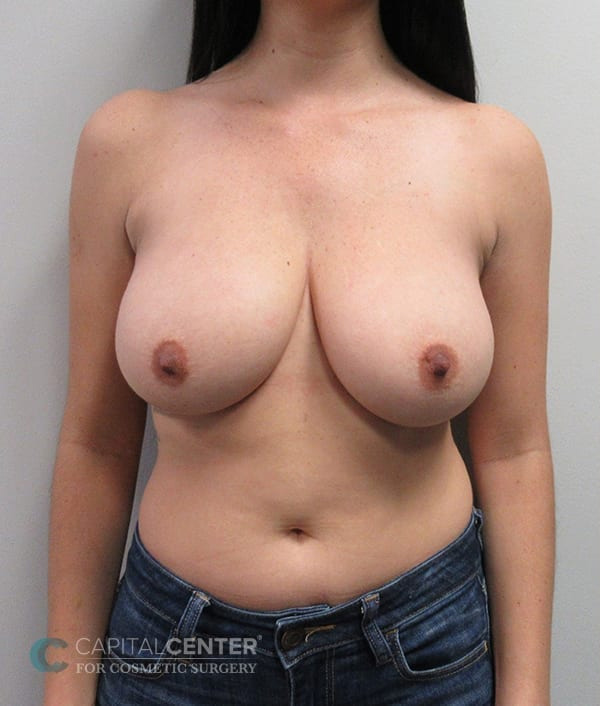
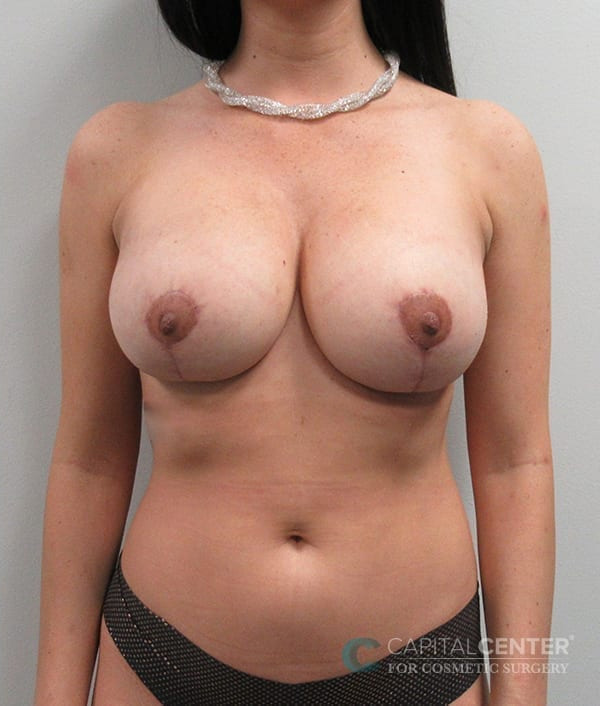
After undergoing fat transfer breast augmentation, you can expect a subtle and natural-looking enhancement in your breast size and shape. Your final results become more apparent after the swelling subsides and the newly grafted fat has settled in, typically within three to six months.
Your fat transfer breast augmentation results are considered permanent, but can be affected by weight fluctuations. Maintaining a healthy, stable weight will help ensure your results are long-lasting.
Our Patients, Our Best Advocates
My experience at the Capital Center has been excellent. Dr. Robert Emery is an outstanding surgeon and he has a very comforting personal approach to caring for his patients. I would recommend him to my friends and colleagues.
This a very patient-oriented practice with the dentist and his assistants being very responsive to questions. Dr. Emery has one of the best chair side manners of any practitioner that I have seen.
This office is more than fantastic. I am a patient of nurse Rona and I would never go to anybody else! She’s extremely talented, kind and everything that she has recommended has worked wonders for me! I recommend her 1,000%!!!
My experience at the Capital Center has been excellent. Dr. Robert Emery is an outstanding surgeon and he has a very comforting personal approach to caring for his patients. I would recommend him to my friends and colleagues.
This a very patient-oriented practice with the dentist and his assistants being very responsive to questions. Dr. Emery has one of the best chair side manners of any practitioner that I have seen.
This office is more than fantastic. I am a patient of nurse Rona and I would never go to anybody else! She’s extremely talented, kind and everything that she has recommended has worked wonders for me! I recommend her 1,000%!!!
Learn More About Fat Transfer Breast Augmentation in Washington, D.C.
For breast enhancement that offers beautiful, natural results, fat transfer breast augmentation may be the perfect solution for you. To learn more, schedule a consultation with Dr. Armando Retana at Capital Center® today by calling (202) 386-7100 or completing the online request form.