
Wisdom Teeth Removal in Washington, DC
Table of Contents
- Real Stories: Wisdom Tooth Removal Patient Stories
- Wisdom Tooth Removal Cost in Washington, D.C. & Flexible Financing Options
- Why Choose Capital Center® for Surgery for Your Wisdom Tooth Removal?
- Book Your Wisdom Tooth Removal Consultation Today
- What Is Wisdom Tooth Removal?
- Benefits of Wisdom Tooth Removal at Capital Center® for Surgery
- Who Is an Ideal Candidate for Wisdom Tooth Removal?
- How Is Wisdom Tooth Removal Performed?
- Preparing For Your Wisdom Tooth Removal
- What to Expect During Wisdom Tooth Removal
- Wisdom Tooth Removal Recovery & Aftercare
- What Results Can I Expect From Wisdom Tooth Removal?
- Wisdom Tooth Removal FAQs
Real Stories: Wisdom Tooth Removal Patient Reviews
I had my wisdom teeth removed by Dr. Emery this past week, and I only have positive things to say about both Dr. Emery and the office staff. The initial consultation was very informative, and Dr. Emery made sure I felt well-informed about the procedure. Sandy, who handles the insurance, was extremely responsive and helpful in navigating the process since it was out-of-network for me, requiring extra coordination to figure out coverage.
–C. P. Google Review
The procedure itself went very smoothly. Dr. Emery ensured I was comfortable and that my pain was well-managed throughout. I was given clear post-op instructions and am recovering well. I highly recommend Dr. Emery and the Capital Center team!
–L.L. Google Review
I would highly recommend this practice based on my experience with Dr. Retana and everyone else who worked to remove my impacted wisdom teeth. Here are my observations:
– The office was very clean and comfortable.
– I was not given strong medication but instead more natural ones (StellaLife Intelligent Healing R)
– I had a quick healing process and did not experience buzz on my lower lip as I heard could happen (my nerve was quite close to one of my teeth). I also did not feel pain after the surgery (I elected to take something to numb the pain during the surgery that lasts for a few days)
– I received very clear instructions on what to do before, during, and after my surgery (my questions were answered fully as well, even at one time I heard Dr. Retana say time-out to stop and take my questions)
– Everyone who worked on my surgery are very friendly
–L.L. Google Review
I came from out of state and developed a painful infection at my wisdom tooth removal site. Dr. Emery got me in within hours, helped me through insurance woes, and gave me multiple follow up appointments to check on my progress. I had to get a revision surgery and he did it that day. The staff are wonderful, the doctors are wonderful, and the nurses are wonderful. Thank you all so much for helping me deal with a very difficult time.
Wisdom Tooth Removal Cost in Washington, D.C. & Flexible Financing Options
The cost of wisdom tooth removal in Washington, D.C., varies depending on the number of teeth to be removed, their location, and the complexity of the case. If patients have dental insurance, some or all of the cost may be covered.
Computer-assisted technology speeds up the wisdom tooth removal process and reduces the need for follow-up visits by limiting postoperative risks, thereby lowering long-term costs. Still, some insurance companies won’t cover our services, or we are out of network—but this shouldn’t stop you from getting the best care you can, which is why our experienced team will work with you and insurance companies to determine final costs and offer flexible financing options when needed.
Why Choose Capital Center® for Surgery for Your Wisdom Tooth Removal?
At Capital Center®, technology is at the forefront of our practice philosophy because it improves the patient experience, enhances safety, and reduces postoperative pain and complications. We use technology, not because it’s easier, but because it is wholly beneficial to you and your experience.
Wisdom tooth removal, or third molar removal, is more comfortable, safer, and more accessible to patients thanks to our experience with the X-Guide® system, advancements in technique, and appropriate medications, which all work to make the process easier for you. Paired with the experience and ongoing research of expert Oral and Maxillofacial Surgeon Robert W. Emery, DDS, wisdom tooth removal is a streamlined process that gets our patients back to their lives with ease.
Book Your Wisdom Tooth Removal Consultation Today
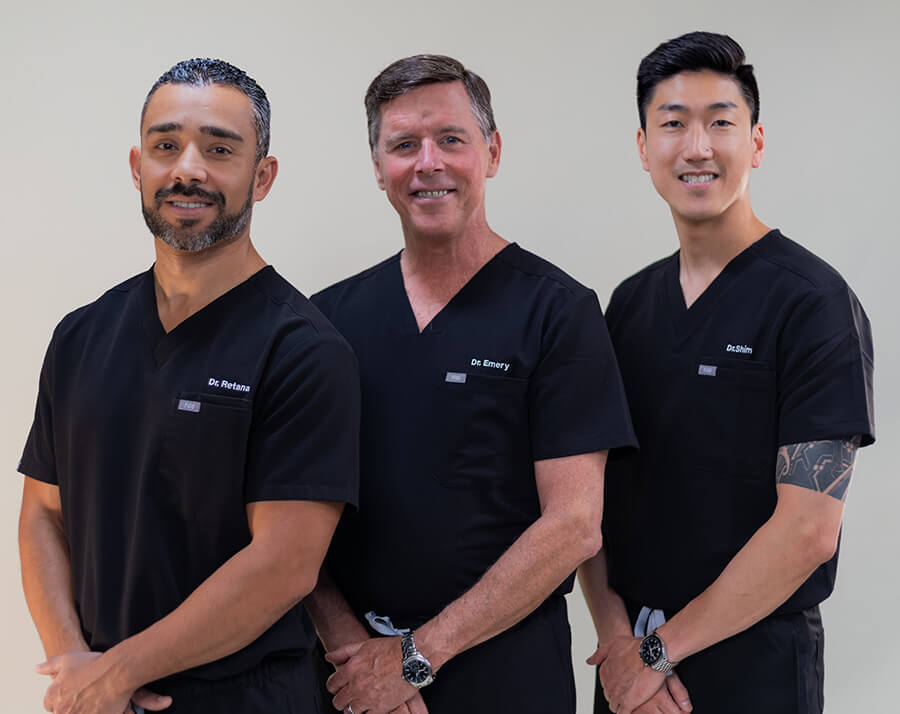
Drs. Emery, Retana, and Shim are ready to help you achieve a healthy smile with minimal pain and a quick recovery through computer-assisted wisdom tooth removal surgery. Call Capital Center® for Surgery today at (202) 386-7100 or complete the contact form to request a consultation and learn what your options are for wisdom tooth removal.
What Is Wisdom Tooth Removal?
Wisdom teeth are the last permanent teeth to appear or erupt in the mouth. Sometimes called “third molars” because they are the third set to appear, wisdom teeth commonly erupt through the gums when people are between the ages of 17 and 25. These teeth sometimes come through partially or not at all. The problem is that many people have impacted third molars, where the teeth are crowded in the mouth and might be erupting at an angle or are trapped within the jawbone. Many dentists, orthodontists, and oral surgeons recommend extracting wisdom teeth when or before they become a problem.
Wisdom tooth removal, or third molar removal, is the surgical process of removing impacted wisdom teeth to remedy or prevent issues. At Capital Center® for Surgery, wisdom tooth extractions are aided by computer-guided navigation to ensure the highest rate of safety and surgical success.
Risks of Freehand or Traditional Tooth Extraction
Traditional or freehand tooth extraction is the norm when it comes to wisdom teeth removal, despite the fact that it carries much higher risks for the patient. Our experienced oral surgeons use advanced, computer-assisted technology during wisdom tooth removal to reduce the following risks that are associated with traditional, freehand tooth extraction:
- Permanent numbness of the lip or tongue due to injury to the inferior alveolar nerve and lingual nerve
- Poor visibility causes surgeons to operate blindly, without being able to see the tip of the drill
And that’s for average patients. Many wisdom tooth patients are considered “high-risk,” due to the depth or placement of their wisdom teeth. These patients are often dismissed as non-candidates for surgery or are left up to chance through traditional methods. Traditional methods for high-risk wisdom tooth extractions often result in a full extraction with nerve injury risks or partial root retention, which can lead to infection.
It’s for these reasons that our team exclusively utilizes the most advanced techniques, technologies, and medications to provide comprehensive and safe results.
Benefits of Wisdom Tooth Removal at Capital Center® for Surgery
Using 3D Cone Beam CT imaging and X-Guide® technologies, our oral surgeons perform wisdom tooth removal with great success and ease, for traditional and high-risk patients alike. Advanced imaging enables our surgeons to visualize the entirety of the jaw, mouth, and nerves, drastically reducing patient pain and the risk of nerve damage. Computer-assisted wisdom tooth removal has the following benefits:
- Reduced risk of nerve damage
- Reduced postoperative complications like dry sockets
- Less pain
- Faster, easier recovery
- Increased safety for high-risk or complex cases
- Less operating time
- Fewer follow-up visits

Who Is an Ideal Candidate for Wisdom Tooth Removal?
- Pain as the teeth attempt to erupt or crowd the other teeth
- Trapped food or debris behind the wisdom teeth
- Infection or periodontal disease
- Tooth decay in a partially erupted third molar
- Damage to nearby teeth or the bone
- Cysts
- Complications with orthodontia (braces)
Are You Considered High-Risk?
At Capital Center®, our oral surgeons routinely see wisdom tooth removal patients who were previously considered high-risk or turned away by other surgeons. The computer-assisted approach we use for imaging and surgery is so advanced that it reduces common risks, enabling us to routinely treat high-risk patients with great success. Even if you have been told otherwise, you may still be a candidate with us.
The best way to determine if computer-assisted wisdom tooth removal is right for you is to call Capital Center® for Surgery at (202) 386-7100 or complete the contact form to schedule a consultation with one of our experienced oral surgeons. Our surgeons will discuss the wisdom tooth removal process with you

How Is Wisdom Tooth Removal Performed?
The exact steps for wisdom tooth removal will vary slightly depending on the number, depth, and position of your wisdom teeth. Your custom surgical plan will be discussed with you during your comprehensive consultation, where you will have the opportunity to ask any questions you may have regarding the procedure, recovery, and results. Your surgeon will walk you through the whole process so you can feel comfortable and confident every step of the way.
Preparing for Your Wisdom Tooth Removal
Wisdom Tooth Removal Consultation
Whether you are referred to our office or you found us on your own, you’ll begin the wisdom tooth removal process with a comprehensive consultation with one of our experienced oral surgeons. They may go over your dental history, give you a brief exam, and map out what you can expect from the rest of the process. They will answer all your questions and take as much time as you need for you to fully understand your procedure.
Wisdom Tooth Removal Imaging
Next, a crucial part of the process is getting accurate dental imaging of your teeth and jaw using 3D Cone Beam CT scanning. The process is quick—using new AI segmented imaging (IconiX), we get a full view of your entire jaw, including deeply impacted third molars, in just a few seconds. These images allow you to see and us to plan your surgery and are used during the operation itself to provide an in-depth view of the teeth, roots, and nerves, greatly improving visibility and reducing damage.
What to Expect During Wisdom Tooth Removal
Step 1: Non-Narcotic Pain Control
Our goal as oral surgeons is to provide the best possible care with the least pain and risk to the patient. One of the ways we do this is by using a non-narcotic, long-lasting pain medication.
This is especially important as wisdom tooth removal is often indicated for younger patients, who should not necessarily be exposed to narcotics. EXPAREL® is commonly used, as it provides slow, long-lasting local anesthetic specifically to the treatment area, reducing the risks associated with opiates while providing exceptional pain relief.
Step 2: Advanced Extraction Technique
Using your AI-enhanced 3D images and the computer-assisted technology, your surgeon will precisely remove the impacted third molar. This will likely look different for each patient, but the process is faster, safer, and more efficient than freehand methods. Through a tiny, precise incision, your surgeon will remove the tooth in parts or as a whole. Alternatively, deep, unerupted teeth can be eliminated by fragmenting them into a fine dust, eliminating the need for “pulling” or forcing an otherwise difficult extraction. The result is less trauma, pain, and risk.
Step 3: Dry Socket Prevention
Dry sockets are a very common risk of traditional wisdom tooth extraction, but are entirely preventable. In every necessary case, your surgeon uses a special medication in the empty socket (space) where the wisdom tooth was, preventing dry sockets from forming.
Wisdom Tooth Removal Recovery & Aftercare
Due to the advanced methodology, technology assistance, and preventative care we provide, our wisdom tooth removal patients experience a faster, more comfortable recovery process than traditional practices can offer. Depending on the anesthesia used, patients can return to regular activities about two to three days after surgery.
Our team will provide you with specific aftercare instructions, including when to come in for a check-up. These instructions may include some of the following:
- Avoid smoking, drinking from straws, and chewy/crunchy foods.
- Take all prescribed medications, including antibiotics.
- Follow all recovery instructions.
- Attend check-up appointments.
- Rest for at least one day after surgery.
What Results Can I Expect From Wisdom Tooth Removal?
Results will vary depending on the reason you had your wisdom teeth removed. Some patients will experience relief from pain, swelling, or oral hygiene issues caused by the impacted or partially erupted teeth. Others will benefit from preventing future problems, including aesthetic issues with crowding. In any case, removing wisdom teeth with custom, computer-assisted surgery is a beneficial procedure for both the function and appearance of your smile.

Wisdom Tooth Removal FAQs
Does wisdom tooth extraction hurt?
We offer multiple different types of anesthesia for wisdom tooth removal, including general, local, and IV sedation. Most often, we will combine long-lasting EXPAREL® (which lasts up to 72 hours, providing postoperative relief) with IV sedation, which results in a relaxing experience. Most of our patients doze off during the procedure and wake up pain-free!
What can I eat after a wisdom tooth extraction?
There are plenty of foods patients can eat after their wisdom tooth extraction. For the first couple of days, patients should avoid hard or crunchy foods and refrain from chewing in the back of their mouth. They should stick to soft or liquid foods only so that their mouth has time to heal. Some of the best foods include:
- Soup or broth, especially blended soups like tomato or pumpkin. It’s important that the soup isn’t too hot, or else it could cause irritation
- Greek yogurt, as it’s packed with protein and vitamins
- Ice cream, as the coolness can feel great on the mouth
- Smoothies, as they’re a great way to get nutrients
- Mashed fruits and vegetables, such as potatoes, bananas, apples, or pumpkins
Why don’t we have room for wisdom teeth?
The main reason humans no longer have room for wisdom teeth is that our diets have changed. Early humans ate very coarse, high-fiber diets that were difficult to chew. This tough diet meant we needed very strong jaw muscles to grind and crush food. As we developed as children, our jaws responded and grew larger in the molar areas. If we look at the jaws of early humans, we rarely see impacted teeth. We also do not see many cavities, as we also did not have processed sugars. This meant early humans did not usually get cavities. As our diets have gotten softer and less fibrous, our jaws have gotten smaller. This means those third molars don’t have any room to move into the jaw. It is too small. The only solution for our patients is to have them removed.
Should I have all my wisdom teeth removed at once?
Generally, it is best to have all the wisdom teeth removed at once. That way, the patient only has to deal with one surgery and one recovery period. Because the patient will only need to schedule one operative appointment at our office and undergo sedation once, a one-time removal can be far cheaper than multiple sessions. What’s more, the recovery time for wisdom teeth removal is the same whether the patient has one tooth or all four teeth extracted. Having them all done in one session can eliminate the number of days a patient needs to take off work or school. Additionally, patients will only need to go on a soft-food or liquid diet once, which can often be a struggle.
Are teeth removed if they are not causing any pain?
If the wisdom teeth aren’t causing any pain, it’s possible they may not need to be removed. However, the only way to know for sure is for patients to schedule a consultation at our office. At this consultation, Drs. Emery, Retana, and Shim can use X-rays and other technology to see how the wisdom teeth look inside the gums. If the wisdom teeth are impacted or don’t appear to have enough room to emerge, our doctors will recommend their removal, even if the patient isn’t currently experiencing pain. Usually, it’s only a matter of time before pain, tooth damage, and infection start to plague the patient’s mouth. It’s much better to be proactive about wisdom teeth removal, as it can help patients avoid experiencing uncomfortable symptoms.
What are the consequences of NOT getting my wisdom teeth removed?
Unfortunately, patients can experience a number of complications if they wait to have their wisdom teeth removed. Because there often isn’t enough room for the wisdom teeth, they may not fully emerge from the gums, a condition known as impaction. Impacted teeth can press on adjacent teeth, causing pain, misalignment, and even damage. This pain is more than a simple toothache because it can radiate from the teeth all the way throughout the jaw and head. What’s more, sometimes teeth only emerge from the gums partially. This makes it extremely hard for patients to clean the entire tooth, and bacteria can often get under the gums and cause extreme decay. This decay can spread from the wisdom teeth to other teeth in the mouth, contributing to overall poor oral health.
Schedule Your Wisdom Tooth Removal Consultation Today
Eliminate pain, or prevent it from occurring in the first place, with computer-assisted wisdom tooth removal. Call Capital Center® for Surgery today at (202) 386-7100 or complete the contact form to schedule your personalized wisdom tooth removal consultation with one of our experienced oral surgeons.